










Introduction to the kibard and its significance
The kibard has come a long way since its inception, transforming from simple designs into sophisticated technology that shapes our daily lives. This innovative device has not only revolutionized the way we interact with our environment but also redefined various industries. As we dive into the evolution of the kibard, you’ll discover how early prototypes paved the way for cutting-edge advancements and what lies ahead for this remarkable invention. Join us on a journey through time as we explore its significance and impact—this is just the beginning of understanding why the kibard is truly a game changer in today’s world.
Early designs and prototypes of the kibard
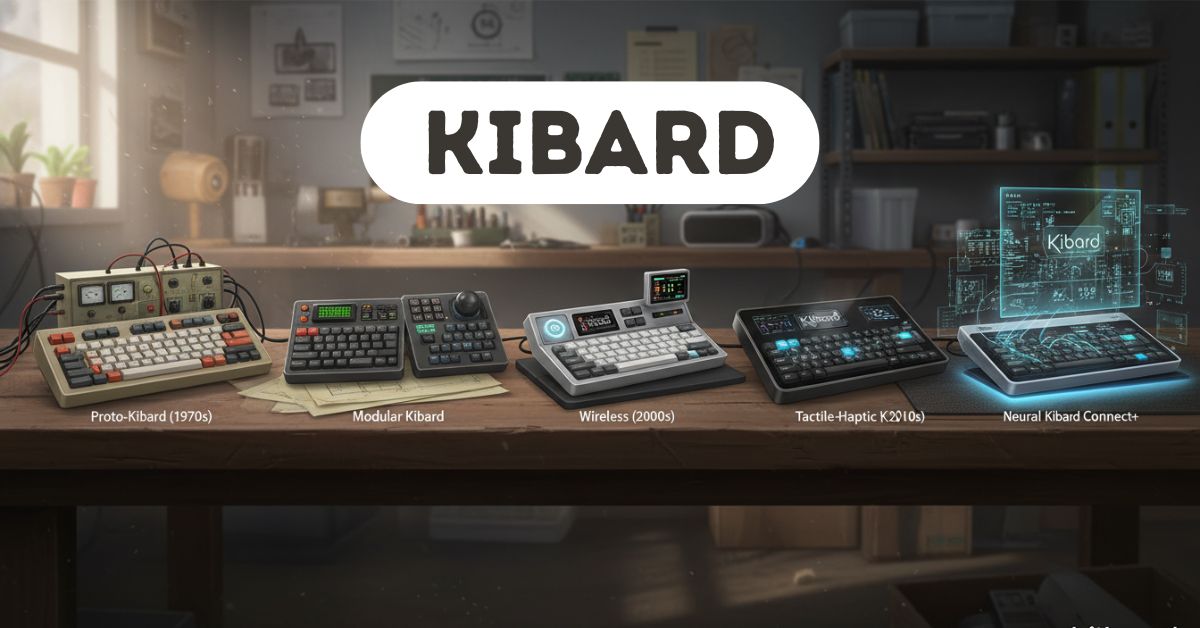
The journey of the kibard begins with its earliest designs, which were often rudimentary and experimental. Initially, creators focused on basic functionality rather than aesthetic appeal. These early prototypes served as a testing ground for different materials and mechanisms.
One notable design featured simple levers that allowed users to interact more easily with their environment. It was groundbreaking at the time but lacked the sophistication we see today.
As designers gathered feedback, they began to refine their concepts. New iterations incorporated ergonomic elements, making them more user-friendly. The shift towards practical usability marked a crucial turning point in kibard development.
In those formative years, each prototype contributed valuable insights into what would eventually shape modern versions. Innovators experimented boldly, laying a solid foundation for future advancements in technology and design.
Technological advancements that shaped the modern kibard
The modern kibard has undergone remarkable transformations, thanks to technological advancements. The integration of lightweight materials has significantly enhanced its durability and usability.
Smart technology now plays a pivotal role in the design of contemporary kibards. Features like responsive touch surfaces and customizable interfaces allow for seamless user interaction.
Wireless connectivity is another game changer. It enables real-time updates and synchronization with various devices, making the kibard more versatile than ever.
Moreover, ergonomic designs have evolved significantly to improve comfort during prolonged use. This focus on user experience elevates productivity across different sectors.
Artificial intelligence is beginning to influence how users engage with their kibards too. Predictive text features and adaptive learning capabilities streamline workflows in unprecedented ways.
These innovations are just scratching the surface of what’s possible for the future of the kibard as technology continues to advance rapidly.
The impact of the kibard on society and industries
The kibard has transformed various industries, enabling streamlined processes and enhanced productivity. In manufacturing, it has optimized workflows by automating tasks that were once manual. This shift not only saves time but also reduces human error.
In the tech realm, the advent of advanced kibards has revolutionized user interfaces. They provide seamless interaction between humans and machines, making technology more accessible to everyone.
Education sectors have also embraced the kibard’s capabilities. With interactive designs and features, learning becomes engaging for students of all ages.
Moreover, its impact extends to healthcare as well. Precise data entry through innovative kibard designs aids in accurate patient records management.
As we continue to explore its potential, the future possibilities are boundless—setting new standards across multiple domains while fostering innovation at every turn.
Future possibilities for the kibard
The future of the kibard is brimming with potential. As technology continues to evolve, so too will its applications. Imagine a kibard integrated with artificial intelligence, adapting in real-time to user preferences and behaviors.
Augmented reality could revolutionize how we interact with this device. Picture immersive experiences where the kibard transforms your workspace into a dynamic interface tailored just for you. This shift could enhance productivity like never before.
Moreover, sustainability might play a crucial role in upcoming designs. Eco-friendly materials and energy-efficient features could make the kibard not only smarter but also greener.
Collaboration across industries will likely fuel innovation as well. Partnerships between tech developers and creatives may lead to unexpected uses of the kibard that we can’t yet envision—pushing boundaries further than ever imagined.
Advancements in healthcare technology might even see customized versions of the kibard aiding professionals in patient care or diagnostics, bringing new dimensions to medical practice.
Interviews with experts in the field
To gain deeper insights into the evolution of the kibard, we turned to industry experts. Their views shed light on its transformative journey.
Dr. Emily Carter, a leading design engineer, emphasized how early prototypes paved the way for current innovations. “The initial designs were rudimentary but laid crucial groundwork,” she noted.
Meanwhile, technology analyst Mark Thompson pointed out that advancements in materials science have significantly enhanced performance. “Stronger and lighter components are game-changers for functionality,” he explained.
Another voice, Professor Lydia Chen from the Institute of Technology, highlighted societal impacts. She stated that the kibard has influenced various sectors by improving efficiency and accessibility in everyday tasks.
These conversations reveal not just technical progress but also a broader cultural shift driven by this remarkable device. Each expert adds a unique perspective to our understanding of its significance and future possibilities.
Conclusion: The kibard’s journey and its potential for further development
The journey of the kibard has been nothing short of remarkable. From its initial rudimentary designs to the sophisticated versions we see today, it has consistently evolved to meet the demands of an ever-changing world. Its significance is evident across various sectors, from entertainment and design to technology and education.
As new innovations emerge, the potential for further development remains vast. Experts continue to explore ways in which enhancements can be made, whether through improved materials or cutting-edge technology that integrates artificial intelligence and user interaction. The ongoing research reflects a commitment not just to advance functionality but also to enrich user experience.
Understanding how deeply embedded the kibard has become in our lives opens up avenues for creativity and innovation that may reshape entire industries. As society leans more into interconnected experiences and digital interfaces, imagine what lies ahead for this versatile tool.
With every iteration, there is exciting potential waiting just around the corner. The next chapter in its evolution promises even greater possibilities as designers, engineers, and researchers work collaboratively towards groundbreaking solutions that redefine its use cases entirely. The story of the kibard continues—each advancement paving the way for future generations who will undoubtedly find even more innovative applications yet untold.